
The question “Is WordPress website dying in 2026?” is being asked more frequently than ever before. With the rapid rise of AI website builders, no-code platforms, headless CMS solutions, and custom frameworks, many business owners and marketers are wondering whether WordPress is still relevant or slowly fading away.
The short answer? WordPress is not dying, but it is evolving fast.
To understand where WordPress stands in 2026, we need to look beyond surface-level trends and examine how the web itself is changing, what businesses truly need, and why WordPress continues to adapt while many platforms fade out.
This blog explores the reality behind the rumors, compares WordPress with modern alternatives, and explains what the future really holds.
The Rise of “WordPress Is Dead” Rumors
Every few years, a new wave of technology sparks predictions about WordPress’s downfall. In 2026, these rumors are fueled by:
- AI-powered website generators
- No-code and low-code platforms
- Headless CMS architectures
- Faster JavaScript frameworks like Next.js
- SaaS website builders promising “instant” websites
At first glance, it feels like WordPress is being surrounded from all sides. But history tells a different story. WordPress has survived the rise of Wix, Squarespace, Webflow, Shopify, and countless proprietary CMS platforms and continues to power over 40% of the internet.
What’s actually happening is not death, but transformation.
Why WordPress Still Dominates the Web in 2026
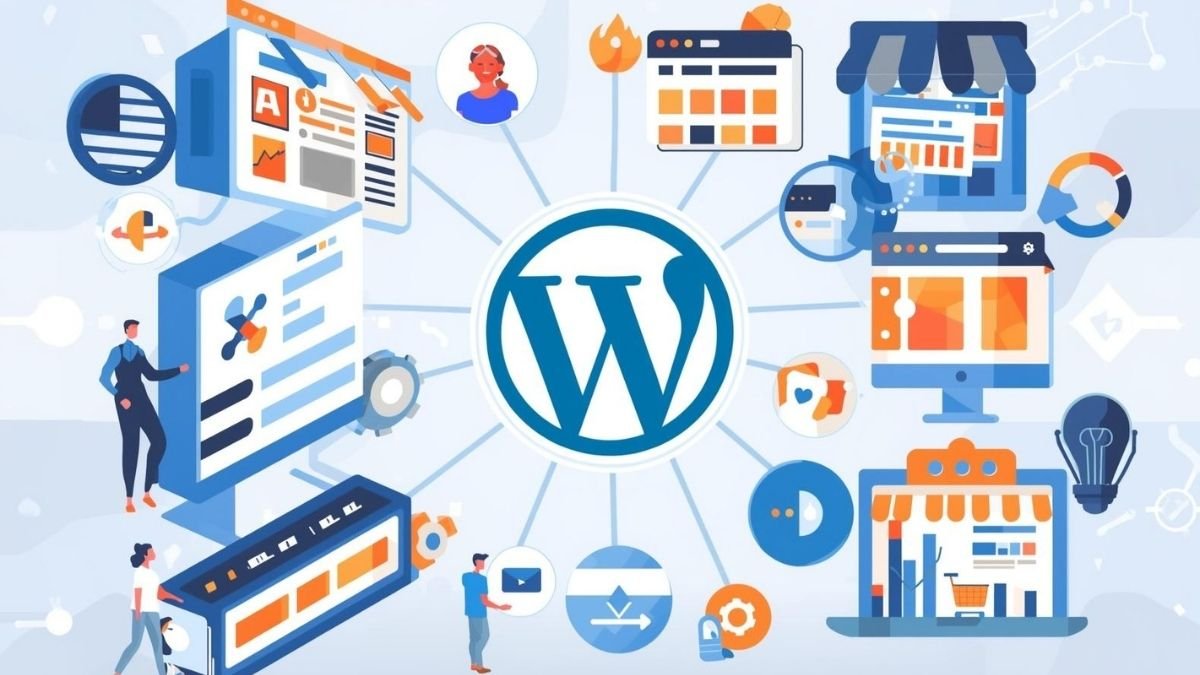
WordPress remains relevant because it solves real-world business problems better than most alternatives.
1. Open-Source Flexibility
Unlike closed platforms, WordPress gives businesses full ownership of their data, code, and hosting. This freedom matters more in 2026 as companies prioritize data control, compliance, and scalability.
2. Massive Ecosystem
With tens of thousands of plugins, themes, integrations, and developers worldwide, WordPress adapts faster than proprietary platforms. When trends change, WordPress evolves—not rebuilds from scratch.
3. SEO-Friendly by Nature
Search engines still reward structured content, performance optimization, and clean architecture, areas where WordPress excels when built correctly.
4. Enterprise-Level Scalability
Major brands, news portals, and high-traffic platforms continue to rely on WordPress with advanced caching, headless setups, and cloud hosting.
WordPress isn’t old, it’s mature.
Vibe Coding vs Traditional Coding: Which Approach Works Better?
One of the most significant shifts in 2026 is the rise of “vibe coding”—a term used for rapid, AI-assisted, visual, and low-code development approaches.
Vibe Coding: Pros & Cons
Pros
- Faster development
- Minimal technical skills required
- Ideal for MVPs and small projects
Cons
- Limited customization
- Performance constraints
- Vendor lock-in
- Poor scalability for complex needs
Traditional Coding: Pros & Cons
Pros
- Complete control
- Better performance
- Long-term scalability
- Strong security
Cons
- Higher cost
- Longer development time
WordPress sits in the middle ground, combining the speed of vibe coding (via themes, builders, and plugins) with the power of traditional coding when needed. Developers can extend WordPress endlessly, making it one of the most balanced platforms in 2026.
WordPress vs. Custom Coding: Which Website Building Method Is Right for You?
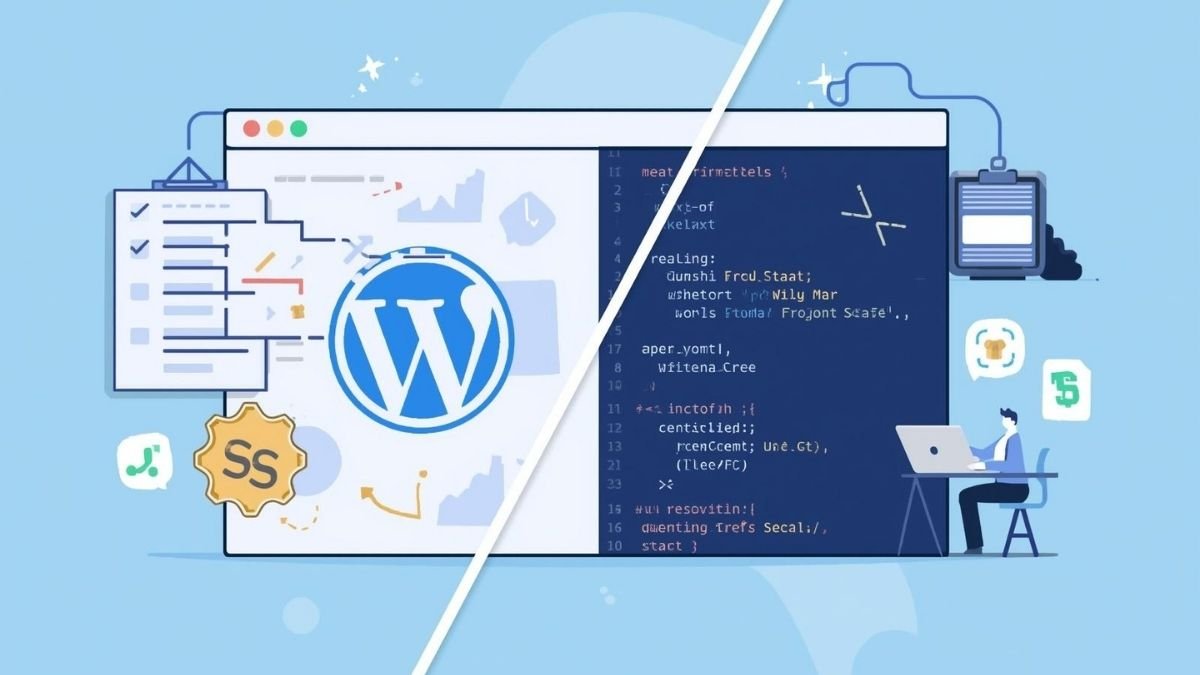
Another significant debate shaping 2026 is WordPress vs. Custom Coding: Which Website Building Method Is Right for You?
When Custom Coding Makes Sense
- Extremely complex applications
- Real-time systems
- Unique performance-heavy logic
- Large-scale SaaS products
When WordPress Is the Smarter Choice
- Business websites
- Content-driven platforms
- eCommerce stores
- Marketing-focused portals
- SEO-heavy websites
Custom coding offers precision, but it also increases cost, maintenance, and time-to-market. WordPress provides 80–90% of what most businesses need, with the ability to custom-build the remaining 10%.
That’s why WordPress continues to win in real-world business scenarios.
AI, Automation, and the Evolution of WordPress
AI isn’t killing WordPress, it’s powering it.
In 2026, WordPress integrates seamlessly with:
- AI content generation
- Predictive SEO tools
- Smart personalization engines
- Automated security monitoring
- Performance optimization systems
Rather than replacing WordPress, AI enhances it. Businesses can launch faster, optimize smarter, and scale efficiently—without abandoning a proven CMS.
The Real Problem: Bad WordPress Implementations
When people say WordPress is “slow” or “outdated,” they’re often reacting to poorly built sites, not the platform itself.
Common issues include:
- Bloated themes
- Too many unnecessary plugins
- Cheap shared hosting
- No performance optimization
- Outdated PHP versions
A properly built WordPress site in 2026 can outperform many modern frameworks while remaining easier to manage.
WordPress in eCommerce: Stronger Than Ever
WordPress eCommerce, powered by WooCommerce, remains a serious competitor to Shopify and custom stores.
Why?
- Full ownership of customer data
- Flexible pricing models
- Unlimited customization
- Advanced integrations
- No forced transaction fees
For brands that want control and scalability, WordPress-based eCommerce remains a robust solution in 2026.
Security & Performance: No Longer Weak Points
Modern WordPress has addressed its historical weaknesses:
- Improved core security
- Automated updates
- Advanced firewall integrations
- Headless architecture options
- Cloud hosting compatibility
When managed correctly, WordPress is no longer the security risk it once was perceived to be.
The Role of Agencies in WordPress’s Future
As WordPress becomes more advanced, the role of expert development partners becomes more important. Businesses now need:
- Custom architecture
- Performance tuning
- Security hardening
- API integrations
- Ongoing optimization
This shift is why professional WordPress agencies are thriving rather than disappearing. One such brand that has positioned itself in this evolving landscape is HireWPExperts, which focuses on scalable, business-ready WordPress solutions rather than basic site builds.
Final Verdict: Is WordPress Website Dying in 2026?
No, WordPress is not dying in 2026.
What is dying is the idea that WordPress is just a “simple blogging platform.”
WordPress has transformed into:
- A flexible CMS
- A powerful eCommerce engine
- A scalable business platform
- A headless content backend
- An AI-ready web solution
The future belongs to platforms that adapt, and WordPress has been adapting for over two decades.The Future of WordPress Development Services
As businesses demand more flexibility, performance, and customization, professional WordPress services are becoming essential. Companies are increasingly investing in:
- WordPress Augmentation Services for extending in-house teams
- Expert WordPress Development Services for scalable, secure platforms
- WooCommerce Development Services for flexible and growth-ready online stores
WordPress isn’t disappearing; it’s becoming more powerful, more professional, and more enterprise-ready than ever before.